

Finding real travel deals comes down to understanding how travel pricing works and knowing where your money actually goes. When you look past advertised bargain fares and flashy room discounts, it becomes much easier to plan a trip that stays within your budget without forcing you to sacrifice basic comfort or peace of mind.
The biggest mistake most travelers make is evaluating a flight or a hotel room in total isolation. A fifty-dollar flight looks like an incredible victory until you realize the airline charges another forty dollars for a standard carry-on bag and lands at an alternate airport located two hours outside the city center. Similarly, a cheap hotel room feels like a smart financial win until you spend every morning and evening taking long, expensive rideshares just to reach the main sights. Genuine value happens when ticket price, accommodation location, travel schedule, and hidden extra expenses all align smoothly.
Trade-Offs to Evaluate Before Booking
Before handing over your payment details, take a realistic look at how initial savings in one specific area might end up creating unexpected expenses somewhere else along your journey.
| Travel Component | Initial Bargain Illusion | Real Hidden Costs | Smarter Strategy |
|---|---|---|---|
| Flights | Ultra-cheap base fares offered by low-cost carriers. | Add-on fees for carry-on bags, seat selection, and airport check-in. | Tally all extra charges to find the true round-trip ticket cost before paying. |
| Lodging | Low nightly room rates located on the outer edges of town. | Daily transit passes, long taxi rides, and hours spent commuting each way. | Pay slightly more for a central location near public transit hubs. |
| Ground Transit | Relying entirely on local taxis or spontaneous rideshares. | Peak surge pricing, toll charges, and expensive airport transfer rates. | Research public transit passes or pre-book airport shuttle services early. |
| Accommodations | Standard hotel rooms reserved for long stays or larger groups. | Heavy spending from eating out at restaurants three times every day. | Rent an apartment with a kitchen to prepare simple breakfasts and snacks. |
Smart Preparation Strategies
Build a Realistic Travel Budget Upfront


Before opening a dozen browser tabs to compare prices across different travel platforms, sit down and determine what you are comfortable spending on the entire trip. A bargain airline ticket will not save your overall budget if your destination turns out to have steep hotel rates, pricey food options, and expensive local transport.
List your essential expenses clearly before starting your search:
- Round-trip airfare or long-distance train tickets
- Hotel, hostel, or rental accommodations
- Local transit passes, car rentals, or fuel expenses
- Daily meals, casual dining, coffee, and basic groceries
- Sightseeing, museum entry tickets, and organized tours
- Travel insurance, luggage fees, and emergency cash reserves
Having a firm total spending limit keeps your search focused. It prevents you from jumping at a cheap flight to an expensive city that ultimately strains your personal finances.
Use Schedule Flexibility to Your Advantage
Ticket and hotel prices move constantly based on underlying consumer demand. School holidays, summer breaks, weekend rushes, and local festivals naturally push prices higher. If your schedule has even a little room to shift, use that flexibility to compare prices across a broader timeframe rather than locking yourself into rigid dates.
Moving your travel dates by a single day or two can yield noticeable savings. Flying out on a Tuesday or Wednesday is often cheaper than departing on a Friday evening when demand spikes. Similarly, traveling during shoulder seasons—such as visiting southern Europe in late spring or early autumn—offers pleasant weather, shorter lines at major sights, and far lower nightly room rates.
Calculate the Full Flight Price

Base fares rarely tell the complete story of what a flight actually costs. Budget airlines regularly unbundle their services, advertising rock-bottom ticket rates while charging extra for items that traditional full-service carriers include by default.
Look at the complete journey before committing to a ticket:
- Layovers vs. Direct Flights: Saving thirty dollars on airfare might not be worth an eight-hour layover on a short three-day weekend trip.
- Arrival Times: A late-night arrival might feature a lower fare, but if public trains and buses have stopped running for the evening, an expensive night taxi can erase those savings instantly.
- Secondary Airports: Budget carriers frequently use alternate airports located far outside major metropolitan areas. Calculate the extra train fare and total travel time required to reach the city center before deciding if the flight is truly cheap.
Smarter Booking and Logistics
+-------------------------------------------------------------------+
|                     BALANCED TRAVEL PLANNING                      |
+-------------------------------------------------------------------+
|  1. SET BUDGET      -> Define total spending limit for the trip.  |
|  2. COMPARE TOTALS  -> Factor in luggage, transit, and extra fees.|
|  3. MAP LOCATION    -> Prioritize central stays near public transit.|
|  4. VERIFY DIRECT   -> Check provider sites for better terms.     |
|  5. BALANCE TIME    -> Avoid extreme layovers just to save a few  |
|                        dollars.                                   |
+-------------------------------------------------------------------+
Location Directs Your Daily Spend

Choosing a place to stay based strictly on the lowest nightly rate often backfires. A cheap guesthouse on the far outskirts of town might look great on paper, but spending two hours every day riding buses or waiting for taxis drains both your daily travel budget and your precious vacation time.
Check prospective stays on a map before confirming your reservation. Look for places near metro stations, major bus routes, or within easy walking distance of local neighborhood markets and affordable dining options. A centrally located room might cost a bit more per night, but it keeps your daily routine simple, cuts local transit expenses, and lets you drop off shopping bags or rest during the afternoon without wasting half your day commuting back and forth.
Check Direct Options and Read Reviews Carefully
Travel search engines are fantastic tools for comparing options quickly, but they should serve as your starting point rather than your final destination. Once you identify a promising flight or hotel, check the official provider site directly. Airlines and hotels often offer direct-booking benefits, such as easier cancellation terms, loyalty points, or complimentary perks like daily breakfast or flexible check-in times.
When evaluating hotel reviews, look past glossy marketing photos and focus on consistent feedback from recent guests:
- Is the street quiet enough to get a good night’s sleep?
- Are basic facilities like hot water, heating, and air conditioning working reliably?
- Is the surrounding neighborhood safe for walking back late at night?
- Do multiple recent reviews mention recurring cleanliness or service issues?
Patterns across multiple recent reviews give an accurate picture of what staying at the property is actually like.
Avoid Artificial Urgency and Common Travel Myths
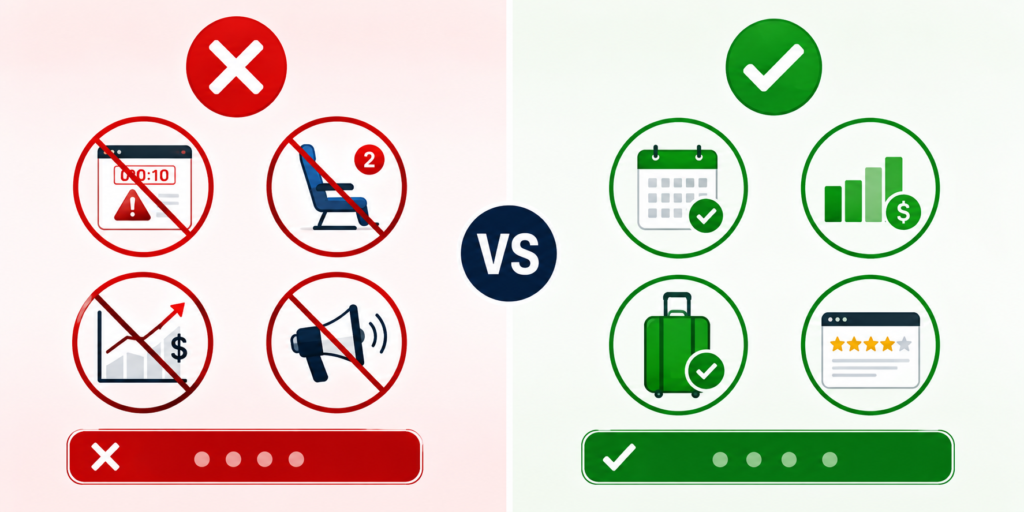
Travel booking platforms frequently feature countdown timers, high-demand pop-ups, or automated alerts stating that only one room remains at a specific price. While popular destinations do fill up during peak periods, pause and review all details carefully before entering your payment information. Take a minute to double-check dates, guest counts, luggage limits, and refund policies.
It is also wise to ignore persistent online myths claiming that airfare is always cheaper if bought at midnight on a Tuesday. Modern dynamic pricing engines adjust rates continuously based on seat availability, route demand, and historical trends. Setting up basic price notifications, monitoring fares for a few weeks, and booking when a price fits your established budget is a far more reliable approach.
Value Your Personal Time
Saving money matters, but your time during a vacation has immense value as well. Booking a flight with two long layovers just to save twenty dollars, or staying in a remote location where half the afternoon is spent sitting on a commuter bus, degrades the overall travel experience. Figure out what matters most for your specific journey, select options that meet your core needs comfortably, and lock them in so you can move on to planning the enjoyable parts of your trip.
FAQs
1. Is ZeroGPT the only tool for checking AI content?
No. You can also use GPTZero, Originality.ai, Copyleaks, Winston AI, and QuillBot AI Detector.
2. Which AI detector is good for blog content?
Originality.ai and GPTZero are popular choices for checking blog articles and web content.
3. Can AI detectors give 100% accurate results?
No. AI detectors can sometimes incorrectly identify human-written content as AI-generated, so their results should be treated as estimates.
4. Can I check plagiarism along with AI content?
Yes. Tools such as Originality.ai, Copyleaks, and Winston AI offer plagiarism-checking features along with AI detection.
5. Should I rely only on an AI detector?
No. It is better to combine AI detection with grammar checking, originality checks, fact-checking, and manual editing.