
The kitchen functions as the operational core of any home. It is the space where morning routines take shape, family meals are prepared, and everyday household interactions unfold. Because the kitchen experiences heavy daily use, selecting the right tools, cookware, storage systems, and dining accessories directly influences both domestic efficiency and overall living comfort.
Equipping a kitchen effectively does not require a lavish budget or a full suite of trendy gadgets. The primary goal is to curate a streamlined, functional environment tailored to your specific cooking habits, emphasizing durability, utility, and ease of maintenance. Navigating the wide selection of cookware, storage containers, appliances, and tableware available today requires prioritizing long-term value over temporary discounts.
Core Categories for a Functional Kitchen
1. Fundamental Cookware

Cookware serves as the absolute foundation of culinary preparation. Rather than purchasing bulky, multi-piece sets that contain items you rarely touch, it is far more practical to invest in core pieces that directly align with your regular cooking style.
Key structural factors to evaluate when selecting cookware include:
- Material Composition: Stainless steel, cast iron, enameled iron, anodized aluminum, and tri-ply clad metals each possess unique heat retention, distribution, and durability profiles.
- Stovetop Compatibility: Ensure all pots and pans are flat-bottomed and magnetic if you cook on an induction surface.
- Base Construction: Thicker, encapsulated bases distribute heat evenly across the surface and resist warping when exposed to sudden temperature changes.
- Handle Ergonomics and Security: Solid, securely riveted handles offer significantly safer handling than components joined with weak screws or adhesives.
A minimalist, high-utility collection—such as a 10-inch frying pan, a two-quart saucepan, and a heavy-bottomed Dutch oven or stockpot—frequently provides far better day-to-day performance than an inexpensive twelve-piece boxed set.
2. Systematized Kitchen Storage

An organized storage system keeps ingredients fresh, protects dry goods from ambient moisture, and prevents unnecessary countertop clutter.
When choosing storage containers, select modular, stackable shapes that maximize vertical space within pantry shelves and refrigerator drawers. Clear materials, such as borosilicate glass or BPA-free food-safe plastics, allow for immediate visual identification of contents without opening lids. Always review manufacturer specifications to confirm whether containers are safe for microwave heating, freezer storage, or high-temperature dishwasher cycles based on your household habits.
3. High-Utility Small Appliances
Countertop appliances should reduce manual labor and accelerate prep time without consuming excessive surface area.
Before purchasing any appliance, evaluate its expected usage frequency:
- High-Utility Essentials: Equipment used daily or multiple times per week, such as high-torque blenders, electric kettles, and compact food processors.
- Low-Utility Niche Tools: Single-purpose devices, such as egg cookers, waffle irons, or avocado slicers, which offer limited functionality while consuming valuable cabinet space.
Analyze motor wattage, operational noise, cord management, counter footprint, warranty coverage, and the local availability of replacement parts before adding any electronic appliance to your kitchen setup.
Key Product Evaluation Matrix
| Category | Priority Focus | Key Metric to Evaluate |
|---|---|---|
| Cookware | Durability & Thermal Distribution | Base thickness, riveted handles, stove compatibility |
| Storage Units | Space Efficiency & Seal Integrity | Airtight silicone gaskets, modular stackability, thermal tolerance |
| Kitchen Knives | Balance & Edge Retention | Full-tang construction, high-carbon steel, handle ergonomics |
| Small Appliances | Operational Utility & Footprint | Motor wattage, ease of cleaning, counter dimensions |
| Tableware | Structural Strength & Maintenance | Chip resistance, dishwasher safety, vertical stack height |
Essential Cutlery and Workspace Organization
Selecting Core Kitchen Knives
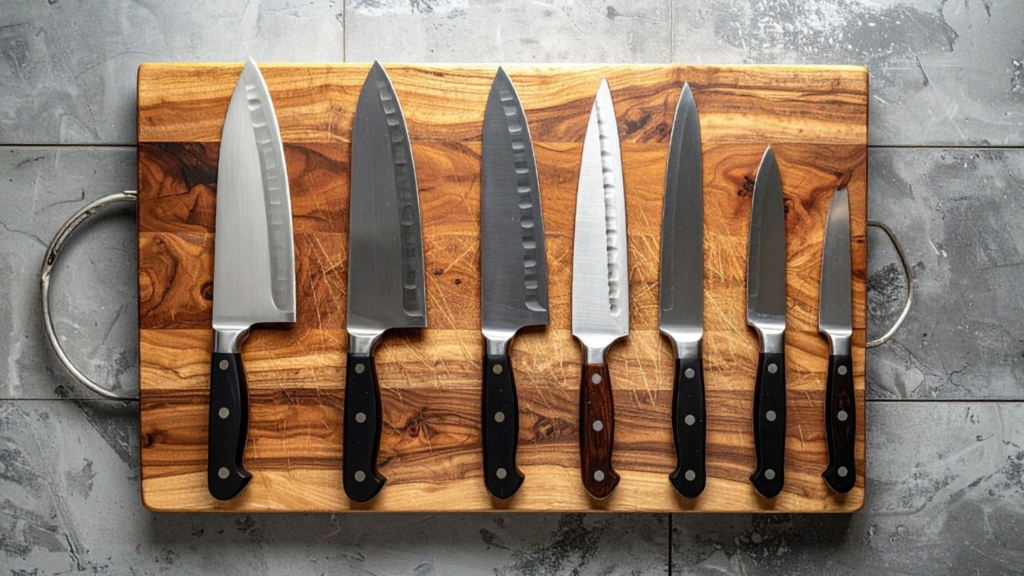
A sharp, well-balanced knife drastically improves prep speed, control, and safety. Contrary to popular belief, dull knives are far more dangerous than sharp ones because they require excessive downward force, increasing the likelihood of slippage.
A complete home kitchen requires only three core knives:
- Chef’s Knife (or Santoku): The primary workhorse for chopping, slicing, and dicing vegetables, herbs, and proteins.
- Paring Knife: A small, nimble blade designed for detailed work such as peeling fruit, trimming fat, or seeding peppers.
- Serrated Bread Knife: An essential long blade featuring saw-like teeth that cut through crusty bread, tough squash skins, and delicate tomatoes without crushing the interior.
Look for full-tang construction—a design feature where the continuous piece of metal forming the blade runs all the way through the end of the handle—to guarantee structural integrity, weight balance, and long-term durability.
Workspace and Drawer Organization
Systematic workspace layout significantly reduces meal preparation times and eliminates frustration. Measure internal drawer dimensions and cabinet shelf heights accurately before buying organizers or inserts.
Modular drawer dividers keep cutlery, measuring spoons, and cooking utensils neatly separated, while adjustable shelf inserts create extra storage levels within deep cabinets. Position high-frequency items—such as primary cooking oils, salt cellars, black pepper, and heavily used spatulas—within arm’s reach of the main cooking station. Items used less frequently can be shifted to higher or deeper storage zones.
Smart Purchasing and Financial Value Assessment
Long-Term Value versus Initial Purchase Price
Evaluating kitchen products strictly by their initial price tag often results in higher overall spending due to frequent replacements. A medium-priced, heavy-duty stainless steel skillet that lasts twenty years delivers vastly superior economic value compared to a cheap, thin non-stick pan that degrades and peels within twelve months.
Focus on the total cost of ownership over time. It is generally wiser to allocate a higher portion of your budget to high-friction items—such as primary kitchen knives, main cooking pots, and daily-use appliances—while keeping spending modest on lower-impact items like mixing bowls or storage trays.
Avoiding Impulse Purchases and Marketing Traps
Modern marketing frequently promotes specialized, single-task gadgets designed to solve minor kitchen inconveniences. In the vast majority of cases, a standard chef’s knife, a sturdy cutting board, and basic prep techniques perform these tasks just as fast without cluttering your workspace.
Before purchasing any specialized tool, work through three simple questions:
- Do I already own a general-purpose tool that can accomplish this exact task?
- Where will this physical item be stored when it is not actively in use?
- Will this tool be pulled out and used at least once every week?
If the answer to these questions indicates low utility or poor storage capability, skip the purchase and rely on your fundamental tools instead.
Practical Maintenance for Long-Term Utility
To maximize the working lifespan of your kitchen equipment and prevent premature wear:
Cookware Care

Avoid subjecting metal pans to extreme thermal shock. Never plunge a scorching hot pan directly into a sink of cold water, as the rapid temperature drop can permanently warp the metal base and crack protective coatings. Allow cookware to cool to room temperature naturally before washing. Avoid using harsh abrasive powders or steel wool on polished or non-stick surfaces to prevent fine scratching.
Knife Preservation
Hand-wash quality kitchen knives immediately after use using mild dish soap and warm water, then dry them completely with a towel before storage. Never place high-carbon or full-tang chef’s knives in an automatic dishwasher. The combination of intense heat, prolonged moisture, high-pressure water jets, and harsh chemical detergents dulls sharp edges, causes microscopic pitting along the blade, and eventually degrades handle materials.
Storage Unit Inspection
Periodically remove and inspect the silicone sealing rings fitted inside the lids of airtight storage containers. Clean the grooves thoroughly to prevent the accumulation of fine food dust, moisture, or residue that can compromise the seal over time.
Building a Kitchen That Fits Your Routine


A truly functional kitchen is built over time through deliberate choices rather than rushed mass purchases. Every household operates with a unique rhythm, dictated by culinary traditions, dietary choices, family size, and available schedule constraints.
By prioritizing essential, high-quality tools, evaluating materials objectively, maintaining an organized workspace, and caring for your items properly, you create an efficient culinary space that supports your daily living routines for years to come.
FAQs
1. What are the essential kitchen products?
Cookware, knives, cutting boards, utensils, and storage containers are useful essentials.
2. How can I find affordable kitchen deals?
Compare prices, reviews, quality, warranties, and return policies before buying.
3. Are expensive kitchen products better?
Not always. Choose products based on quality, durability, and your actual needs.
4. Which dining products should I buy first?
Start with plates, bowls, glasses, cups, and basic cutlery for everyday meals.
5. How can I avoid unnecessary kitchen purchases?
Buy products that you will use regularly and avoid gadgets that duplicate items you already own.

Travel Deals 2026: Best Flight, Hotel & Holiday Offers
Planning a holiday does not always mean spending a large amount of money. With the…

Best Travel Deals 2026: Save on Flights, Hotels & Holidays
Finding genuine value when planning a trip is less about hunting down fleeting internet sales…

Travel Deals Guide 2026: Affordable Trips, Flights & Hotels
Traveling does not always have to be expensive. With a little planning and some smart…

Best Travel Deals 2026: Affordable Flights, Hotels & Vacations
Traveling remains one of the most fulfilling ways to disconnect from daily routines, explore new…

Maa Vaishno Devi Yatra 2026: Best Travel Deals & Complete Guide
A visit to Maa Vaishno Devi is a special journey for millions of devotees. Located…

Best Kitchen & Dining Products 2026: Affordable Deals & Tips
The kitchen functions as the operational core of any home. It is the space where…